7 Ways to Reduce No-Shows in Your Practice
Reduce no-shows in your therapy practice with these 7 proven strategies, plus the real math on what each missed session costs your annual revenue.
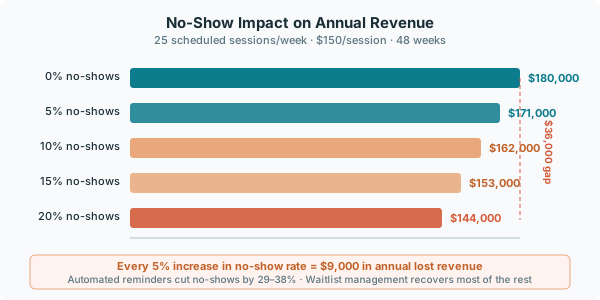
The Hidden Cost of No-Shows
A no-show isn't just an empty hour. It's a fixed-cost hour, rent, software, liability insurance, and your own time all run whether a client shows up or not.
Here's the math most therapists don't look at directly. If you average 2 no-shows per week at $150/session, over 48 working weeks that's $14,400 in lost revenue per year. At $175/session with 3 weekly no-shows, you're looking at $25,200 gone annually: without any other practice changes.
No-shows also tank your therapist productivity rate. A therapist with a 20% no-show rate on a 25-session schedule is actually completing only 20 sessions, dropping from a 78% productivity rate to roughly 63%, below the MGMA benchmark floor.
Getting that rate back above 70% doesn't require more clients on your roster. It requires fewer clients who don't show up.
1. Automated Appointment Reminders
Manual reminder calls worked in 2005. Now they're a liability for staff time and inconsistency.
Automated reminders through your EHR (SimplePractice, TherapyNotes, Jane App) should go out at two intervals:
- 72 hours before the appointment (gives time to cancel, not just ghost)
- 24 hours before the appointment (final confirmation)
Adding a text reminder to email cuts no-show rates by 29–38% in mental health settings, according to research published in *Psychiatric Services*. Both channels together outperform either alone.
Make sure your reminder message asks for a reply confirmation, not just passive receipt. "Reply YES to confirm or call us to reschedule" gets a response. "Here's a reminder of your appointment" does not.
2. A Written Cancellation Policy
Verbal cancellation policies don't exist. If it's not in writing and signed at intake, you have no recourse.
Your written policy should include:
- The required notice window (24 or 48 hours is standard)
- The fee for late cancellation or no-show
- How the fee is collected (card on file, invoice, etc.)
- Any exceptions (documented illness, emergency)
Common late cancellation fees range from $50–$150 for insurance clients and full session rate for private pay clients. The goal isn't revenue from fees, it's behavior change. Most clients will start canceling on time once they understand a real consequence exists.
Get a signature at intake. Review it briefly with new clients. Then enforce it consistently.
3. Credit Card on File
The single most effective no-show deterrent is a credit card stored securely in your payment system.
When clients know you can charge a no-show fee without a separate billing conversation, show rates improve significantly. Square, Stripe, and most EHR payment integrations support stored card data with appropriate HIPAA safeguards.
Chargebacks for no-show fees do happen, but rarely, and having a signed policy document protects you in disputes. The discomfort of implementing this is almost always worse than the actual client conversations.
4. 24-Hour Confirmation Requirement
Go beyond reminders. Require clients to confirm within 24 hours or lose their slot.
This policy works especially well for new clients and clients with a history of late cancels. The message is simple: "Please confirm your appointment by 5pm the day before, or we may offer your slot to another client on our waitlist."
You don't always need to actually give the slot away, the policy just makes the appointment feel real and conditional, not guaranteed regardless of behavior.
5. Session Deposits for New Clients
A $50–$100 deposit applied to the first session does two things: it filters out uncommitted new clients before they ever appear on your schedule, and it dramatically reduces first-session no-shows.
First appointments have no-show rates 2–3x higher than ongoing sessions. A deposit creates a small but real commitment that separates the serious inquiries from the browsers.
For private pay practices, this is straightforward. For insurance clients, check your contract terms, some payers prohibit deposits or have specific rules around advance fees.
6. Telehealth as a Buffer Option
One underused no-show reducer: same-day telehealth conversion.
When a client calls the morning of their appointment saying they can't make it in person, have a standard response ready: "I can offer you a telehealth session at the same time if you'd like." Many clients who would otherwise cancel will take this option.
This requires telehealth capability and a parity-compliant state (most states now have telehealth parity laws for mental health), but it converts a potential no-show into a billable session with almost no friction.
See telehealth vs in-person productivity for a broader look at how telehealth affects practice economics.
7. Active Waitlist Management
Every no-show should trigger an immediate fill attempt from your waitlist.
Even a 2-hour gap before a session can sometimes be filled with a waitlisted client who's eager and flexible. The key is having your waitlist organized by:
- Contact preference (text vs call)
- Availability windows
- Session length tolerance
A short text to 3–4 waitlisted clients often fills a same-day slot. "A session opened up today at 2pm, available on a first-reply basis." Most clients appreciate the outreach even when they can't take the slot.
Over time, a managed waitlist keeps your actual productivity rate close to your scheduled rate, even when no-shows happen. Calculate what your current no-show rate is costing you with the session revenue and productivity tool.
Putting It Together: Realistic Impact
Implementing even 3–4 of these strategies consistently can cut no-show rates from 15–20% down to 5–8%. For a practice with 25 scheduled sessions per week at $150/session:
- At 18% no-show rate: 4–5 missed sessions/week = $31,200–$39,000 in annual lost revenue
- At 6% no-show rate: 1–2 missed sessions/week = $7,200–$15,600 in annual lost revenue
The difference, up to $31,400 per year, comes from policies, systems, and follow-through. Not from adding more clients to the schedule.
Sources and Further Reading
- Psychiatric Services Journal, Reminder System Effectiveness in Mental Health (2022)
- NASW Practice Management Standards
- About This Calculator
- How to Track Billable Hours as a Therapist
- Therapist Productivity Rate: Industry Benchmarks