Managing Productivity in a Group Practice
Group practice productivity starts with clear per-clinician benchmarks. Learn how to set targets, tie compensation to performance, and avoid burnout.
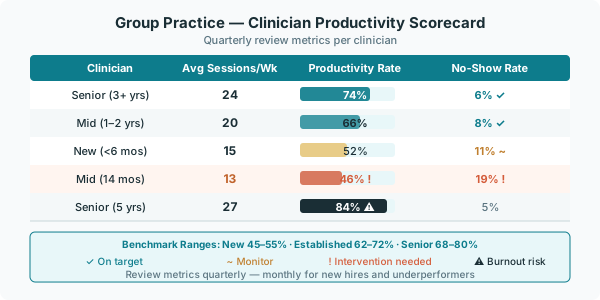
Why Group Practice Productivity Is Different
Running a group practice means you're not just tracking your own numbers anymore. You're responsible for the productivity of every clinician on your roster, and the variance between your best and worst performers can represent $40,000–$80,000 in annual revenue difference per clinician.
Group practice owners who don't track per-clinician productivity often discover the problem too late: a clinician running at 48% productivity for six months while being paid a guaranteed salary represents a significant cash drain that could have been addressed at month two.
The fix isn't punitive oversight. It's clear benchmarks, consistent measurement, and honest conversations. Use the therapist productivity calculator to establish a baseline for each clinician before setting targets.
Setting Per-Clinician Benchmarks
The MGMA benchmark of 65–80% applies at the individual clinician level, not the practice average. A practice where one clinician runs at 85% and another at 45% isn't "averaging 65%", it's a practice with one productive person and one underperformer.
Realistic benchmark ranges by clinician type:
- New clinicians (0–6 months): 45–55%. They're building caseload, learning systems, and need onboarding support.
- Established clinicians (6–24 months): 62–72%. Should be approaching benchmark range with some support.
- Senior clinicians (2+ years): 68–80%. Should be at or above MGMA benchmark consistently.
- Part-time or specialty clinicians: Benchmarks may be lower due to caseload constraints or service type.
Don't apply the same benchmark to a clinician who just joined and one who's been with you for three years. Context matters. Expectations should be explicit and graduated.
W2 vs 1099: How Employment Structure Affects Productivity
The W2 vs 1099 distinction doesn't just affect taxes, it fundamentally changes the incentive structure for productivity.
W2 clinicians receive a salary or hourly rate regardless of sessions held. This can reduce the natural motivation to fill the schedule, especially if the salary is generous relative to the required session volume. You need clear productivity requirements written into the employment agreement.
Typical W2 structure: base salary with a session count requirement (e.g., 22 sessions/week minimum) plus a productivity bonus above a threshold (e.g., 10% of collected revenue above 25 sessions/week).
1099 contractors are paid per session or per collected revenue (usually 50–60% of collections). Productivity risk shifts to them, they earn what they bill. But you have less control over scheduling, client communication standards, and practice culture. And true 1099 status requires genuine independent contractor classification, which the IRS and many state labor boards scrutinize closely.
Most group practices move toward W2 as they grow, accepting higher employment costs in exchange for greater control and consistency.
Performance Review Metrics for Clinicians
A quarterly productivity review for each clinician should cover:
Volume metrics:
- Average weekly sessions completed (trailing 12 weeks)
- No-show/cancellation rate
- Schedule fill rate (sessions held ÷ available slots)
Revenue metrics:
- Collected revenue per clinician (not billed, collected)
- Average reimbursement per session
- Outstanding claims older than 60 days
Quality indicators:
- Client retention rate (sessions 1–5 completion)
- Average caseload tenure
- Discharge vs dropout rate
These metrics together give you a picture of both productivity and clinical quality. A clinician with high volume but a 60% dropout rate between sessions 3–6 is churning clients, which creates administrative overhead and suggests a clinical issue worth addressing.
Review these quarterly at minimum. Monthly is better for new hires.
Compensation Tied to Productivity
Flat salary with no productivity component creates misaligned incentives. Pure per-session commission creates anxiety and can push clinicians toward overwork or toward cherry-picking "easy" clients.
A balanced compensation model:
- Base salary covering 70–80% of expected earnings at benchmark productivity
- Productivity threshold that must be met consistently to receive full salary
- Performance bonus paid quarterly for sustained above-benchmark performance
Example: A clinician expected to hold 22 sessions/week at $130/session (generating $143,000 gross annually at 48 weeks) might receive:
- Base salary: $65,000/year
- Practice takes: 50% of collections = $71,500 (covers salary + overhead)
- Bonus: 15% of collections above $143,000 threshold
This model works when the math is transparent. Clinicians who understand how their sessions translate to practice revenue tend to take their schedule more seriously.
Avoiding Overwork vs Underperformance
The group practice owner's tension: you don't want clinicians burning out at 85%+ productivity, but you also can't sustain clinicians coasting at 52%.
Signs a clinician may be approaching burnout (even at acceptable productivity numbers):
- Session documentation turnaround increasing from 24 hours to 72+ hours
- Declining client retention in the first 5 sessions
- Increase in reactive cancellations (clinician-initiated, not client)
- Reduced communication responsiveness
Signs of underperformance that's business, not burnout:
- Schedule consistently under-full despite available demand
- High no-show tolerance without policy enforcement
- Slow response to referral outreach
- Low engagement in team scheduling discussions
These require different responses. Burnout signs call for a caseload review and possible temporary reduction. Underperformance calls for a direct performance conversation with clear timelines and benchmarks.
Track productivity monthly, not quarterly, so you can see the trend before it becomes a problem. The practice revenue and productivity tool can help you model what each clinician's numbers mean for overall practice health.
Sources and Further Reading
- MGMA Group Practice Benchmark Report (2023)
- IRS Independent Contractor Classification Guidelines
- APA Group Practice Management Resources
- About This Calculator
- Therapist Productivity Rate: Industry Benchmarks
- Therapist Burnout vs Low Productivity: Know the Difference